Indietool
What Is Do Follow Backlinks and Why They Boost SEO
A do-follow backlink is a plain HTML link without rel="nofollow", rel="sponsored", or rel="ugc", and it can pass ranking signals in a way those qualified links may not. It still matters because large SEO datasets commonly find that top-ranking pages have about 3.8 times more backlinks than pages in positions 2 to 10.
You launch your product, submit it to a few places, share it on X, and then wait for Google to notice. Days pass. Maybe weeks. Your homepage is live, your docs are polished, and your product page looks good, but search traffic barely moves.
That's the moment most founders start asking what is do follow backlinks, usually because they've heard backlinks matter but nobody has explained them in plain English. The usual definitions are technically correct and still unhelpful. They say things like “link equity” and “authority flow” without answering the founder's real question, which is simpler: why would one link from another site make my new site easier to find?
For indie founders, this question matters more than it does for established brands. You don't have years of domain history. You don't have a newsroom, a PR team, or hundreds of sites naturally mentioning you. When your site is new, every strong link can do more work because you're starting with so little authority.
The basic idea is straightforward. Search engines treat some links like endorsements. If another site links to your page with a normal, unqualified link, that can help search engines discover your page and understand that someone chose to reference it.
Simple mental model: A do-follow backlink is closer to a recommendation than a mere mention.
That doesn't mean every backlink is equal. A durable link on an indexed, relevant page is far more useful than a random profile link that nobody visits and search engines rarely crawl. That difference is where many beginners get tripped up.
Table of Contents
- Introduction to Do Follow Backlinks for New Founders
- How Do Follow Backlinks Work as Authority Signals
- Do Follow Versus Nofollow Sponsored and UGC Links
- Why Do Follow Backlinks Still Drive SEO Results
- What Makes a Do Follow Link Actually Count
- Examples and How to Check Your Do Follow Backlinks
- Smart Ways to Earn Quality Do Follow Backlinks
Introduction to Do Follow Backlinks for New Founders
A lot of founders first meet backlinks through frustration, not curiosity. You search your product name and see almost nothing. Or your landing page is indexed, but the pages you care about, like feature pages, integrations, and alternatives pages, seem invisible.
In that situation, a do-follow backlink matters because it can give search engines a clear path to your site and a signal that another page considers you worth linking to. Google's own explanation of link attributes says a plain link is the default editorial link type, while nofollow, sponsored, and ugc are signals attached to links for different contexts, and those attributes are treated as hints rather than strict directives in ranking systems (Google's documentation on link attributes).
Why new sites care so much
If you run an established company site, one more backlink might be helpful but not critical. If you're launching your first SaaS or side project, one good link can become one of the few signals Google has about your existence.
That's partly because backlink opportunity is unevenly distributed across the web. Reporting that cites large web-scale studies says only about 5 to 6% of pages have any external backlinks at all, meaning roughly 94% of content gets none, and it also notes that 66.5% of links built since 2013 are now dead (link decay and backlink concentration data). For a founder with limited time, that changes the strategy. You're not trying to collect links for vanity. You're trying to secure a few links that are relevant, direct, and likely to stay live.
The founder version of the question
Most guides answer “what is a do-follow backlink” like it's a vocabulary test. Founders need a more practical answer:
- Discovery: Can this link help search engines find my page?
- Trust: Does this look like a real editorial reference?
- Permanence: Will the link still exist months from now?
- Relevance: Does the linking page relate to what I built?
Those four questions matter more than SEO buzzwords.
A brand-new product usually doesn't need more tactics. It needs a few trustworthy paths pointing at the site.
If you keep that frame in mind, the rest of the topic gets much easier.
How Do Follow Backlinks Work as Authority Signals
The easiest way to understand a do-follow backlink is to start with a normal link.
In HTML, a regular link looks like this:
<a href="https://example.com">Example</a>
There's nothing special in that code. No extra qualifier. No instruction saying “don't count this.” It's just one page linking to another.
A link as a recommendation
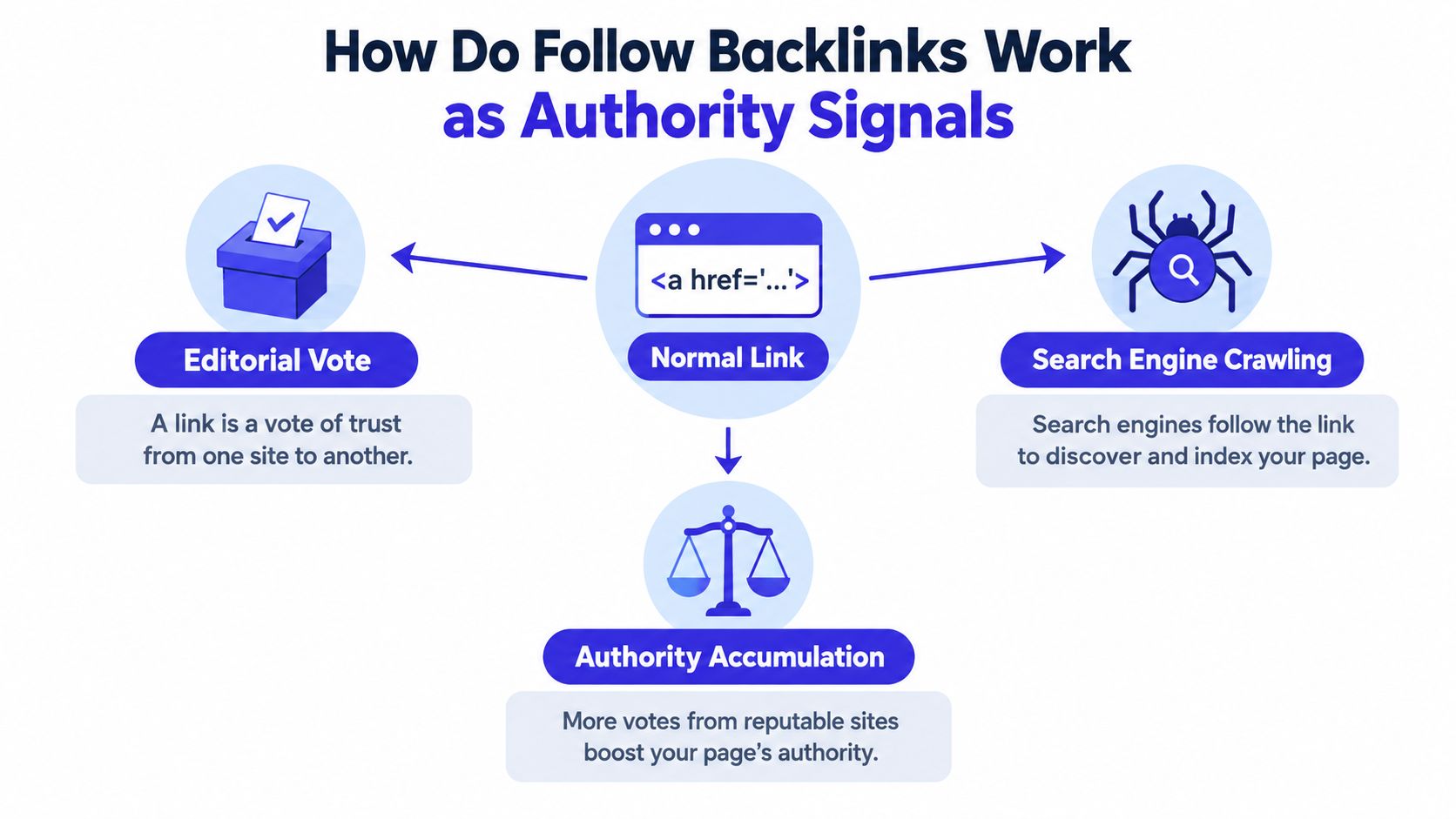
The modern idea behind this came from Google's original PageRank system in 1998, where hyperlinks were treated like votes that helped determine page importance. That's the root of why people still care about do-follow links today. The concept evolved later when Google introduced rel="nofollow" in 2005 and then said in 2020 that nofollow is treated as a hint rather than a directive (historical context and backlink data).
A useful analogy is a recommendation letter.
If a respected founder writes, “I use this analytics tool and recommend it,” that carries weight. If they mention the tool in a paid ad disclosure or in a user comment thread, that's a different kind of signal. Search engines make a similar distinction with link attributes.
What “authority signal” actually means
You don't need to picture authority as some magical SEO juice. Think of it as search engines gathering evidence from the web.
A plain editorial link can help in a few ways:
- It points crawlers toward your page. If the linking page is discoverable, your page becomes easier to find.
- It acts like a reference. One site is choosing to send readers to another.
- It adds context. The surrounding content helps search engines understand what your page is about.
That's why a do-follow link from a relevant article can beat a pile of weak links from irrelevant pages. The value is not just that the link exists. The value is that a credible page placed it in context.
Why founders get confused here
Many people think “dofollow” is a special tag. It isn't. There usually isn't a rel="dofollow" attribute. A link is considered do-follow because it's a normal link without the limiting attributes.
That default trips people up because they expect to see something explicit in the code. In reality, the absence of nofollow, sponsored, or ugc is often the clue.
Practical rule: If a link is a plain editorial link, search engines can treat it as a normal endorsement signal.
For a founder, this matters because the best early links often come from places that naturally publish normal links. Product directories, editorial roundups, partner pages, and useful community resources tend to be more valuable than spammy shortcuts.
Do Follow Versus Nofollow Sponsored and UGC Links
Once you understand that a plain link is the default, the next question is what the other attributes mean.
They don't all say the same thing. Each one gives Google context about how the link was created and how it should be interpreted.
The short version
A do-follow link is the default editorial link. The others are qualifiers.
Here's the clean comparison most founders need:
| Attribute | HTML Example | Signal to Google | Typical Use Case |
|---|---|---|---|
| Do-follow | <a href="https://example.com">Tool</a> |
Default editorial link signal | Article references, product listings, resource pages |
| Nofollow | <a href="https://example.com" rel="nofollow">Tool</a> |
Link is marked as non-endorsed or not trusted in the normal way | Blog comments, forum posts, unvetted links |
| Sponsored | <a href="https://example.com" rel="sponsored">Tool</a> |
Link is associated with advertising, sponsorship, or compensation | Ads, paid placements, affiliate relationships |
| UGC | <a href="https://example.com" rel="ugc">Tool</a> |
Link comes from user-generated content | Community posts, profile pages, comment sections |
What nofollow really means now
A common mistake is thinking nofollow links are worthless. That's too simplistic.
Google says these attributes are treated as hints, not strict commands, which means the search engine may still use them for discovery or other interpretation. But in practical SEO terms, a plain editorial link is still the clearest signal of endorsement. That's why founders usually prefer a do-follow placement when they have a choice.
Nofollow links can still help in other ways:
- Referral traffic: Real people may click them.
- Brand visibility: Mentions can build awareness.
- Natural link profile: Not every legitimate mention on the web will be a standard editorial link.
When sponsored and UGC are appropriate
If you pay for placement, sponsored is the honest label. If your users add the link themselves in comments or profiles, ugc fits.
That distinction matters if you're building links the right way. You don't want to force an editorial interpretation onto something that's clearly promotional or user-submitted.
For founders working on communities, reviews, or product-led content, this is especially relevant. If you're also exploring UGC for SaaS growth, it helps to know those links can still be useful for awareness and distribution even when they aren't the strongest editorial endorsement signal.
A fast way to remember the difference
Use this mental shortcut:
- Do-follow: “This page is linking out normally.”
- Nofollow: “This page is linking, but not endorsing in the usual way.”
- Sponsored: “Money or compensation is involved.”
- UGC: “A user created this link.”
That's enough for most practical decisions. You don't need to memorize every SEO debate. You just need to identify whether a link is a direct editorial reference or a qualified mention.
Why Do Follow Backlinks Still Drive SEO Results
Backlinks still matter because they remain one of the clearest external signals search engines can measure. Your title tags, copy, and technical setup all happen on your own site. Links are different. They come from other sites choosing to point at you.
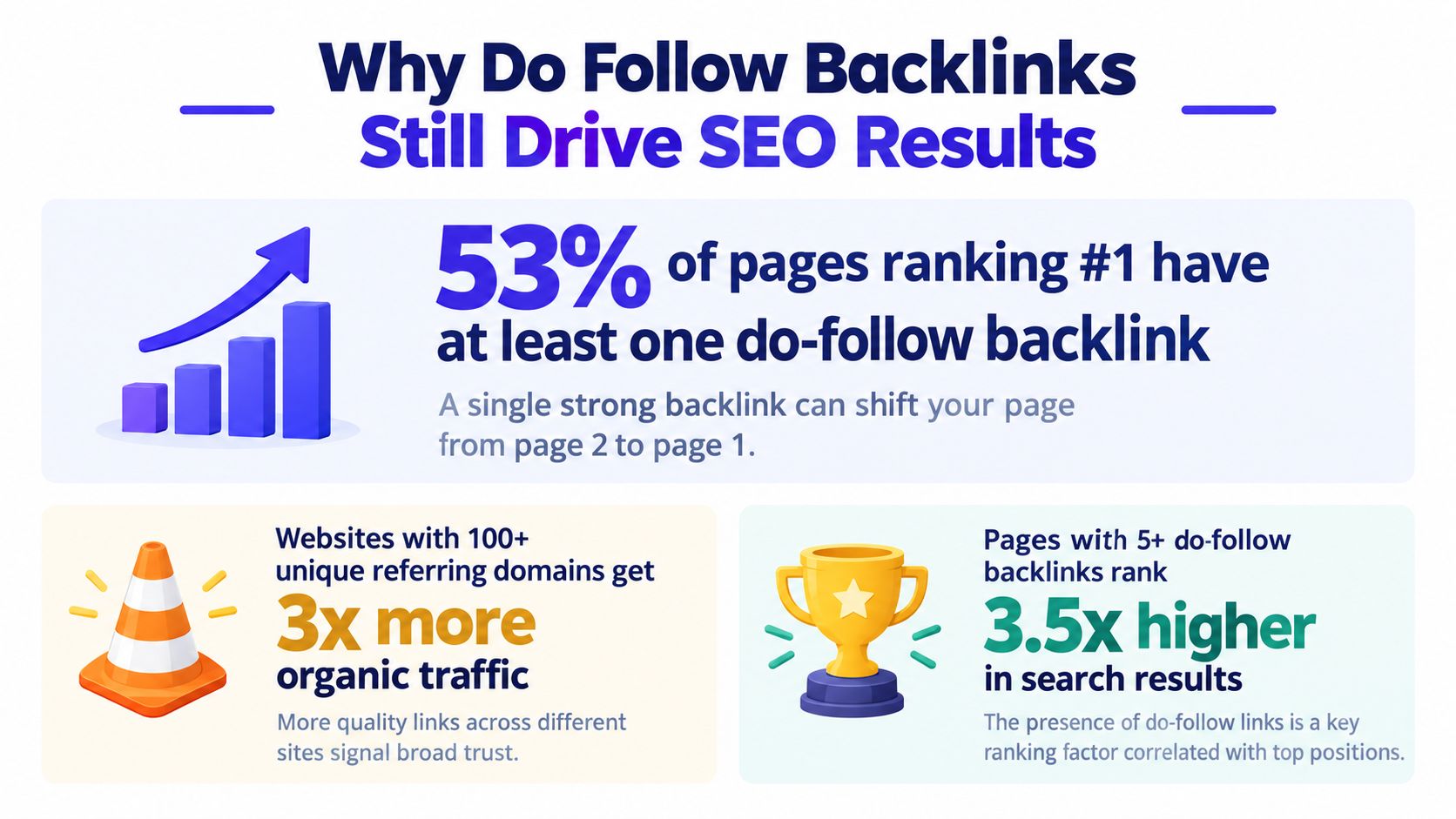
Independent SEO survey data cited in ranking-factor reporting found that in one 2026 survey of 131 SEO professionals, backlinks ranked as Google's second most important factor, and a ranking-factors study also examined both total backlinks and total follow-backlinks among key variables (ranking-factor research PDF).
Why one strong link can beat many weak ones
Founders often assume more links always wins. In practice, the better question is what kind of page is linking to you and why.
A relevant editorial link can help more because:
- It carries context. The page topic helps frame your site.
- It's more believable. Editors and site owners chose to include it.
- It may bring visitors too. That makes the link useful beyond rankings.
This is why a listing or article that stays live can be more valuable than a burst of disposable links. If your site has very little authority, one durable mention from a trusted page can do more than dozens of forgettable placements.
The indie founder angle
New founders usually have three constraints at once:
- Low authority to start with
- Slow indexation on new pages
- Limited time and budget for outreach
That combination changes the math. You don't need a giant campaign first. You need a handful of links that are likely to be crawled, likely to remain live, and topically close to your product.
If you want a more startup-specific framework for that process, this guide to link building for startups is a useful companion to the basics here.
The quality-over-volume reality
The most durable lesson in backlink strategy is that link quality, editorial nature, and referring-domain diversity tend to matter more than raw volume. That matches what practitioners keep seeing in real projects and why founders should avoid bulk link packages that promise quantity without context.
A backlink helps most when a real page had a real reason to mention you.
For a bootstrapped product, that's encouraging. You don't need to outspend bigger companies on link volume. You need to earn placements that make sense, stay published, and point directly to pages you want discovered.
What Makes a Do Follow Link Actually Count
A lot of beginners stop checking as soon as they confirm there's no nofollow tag. That's not enough.
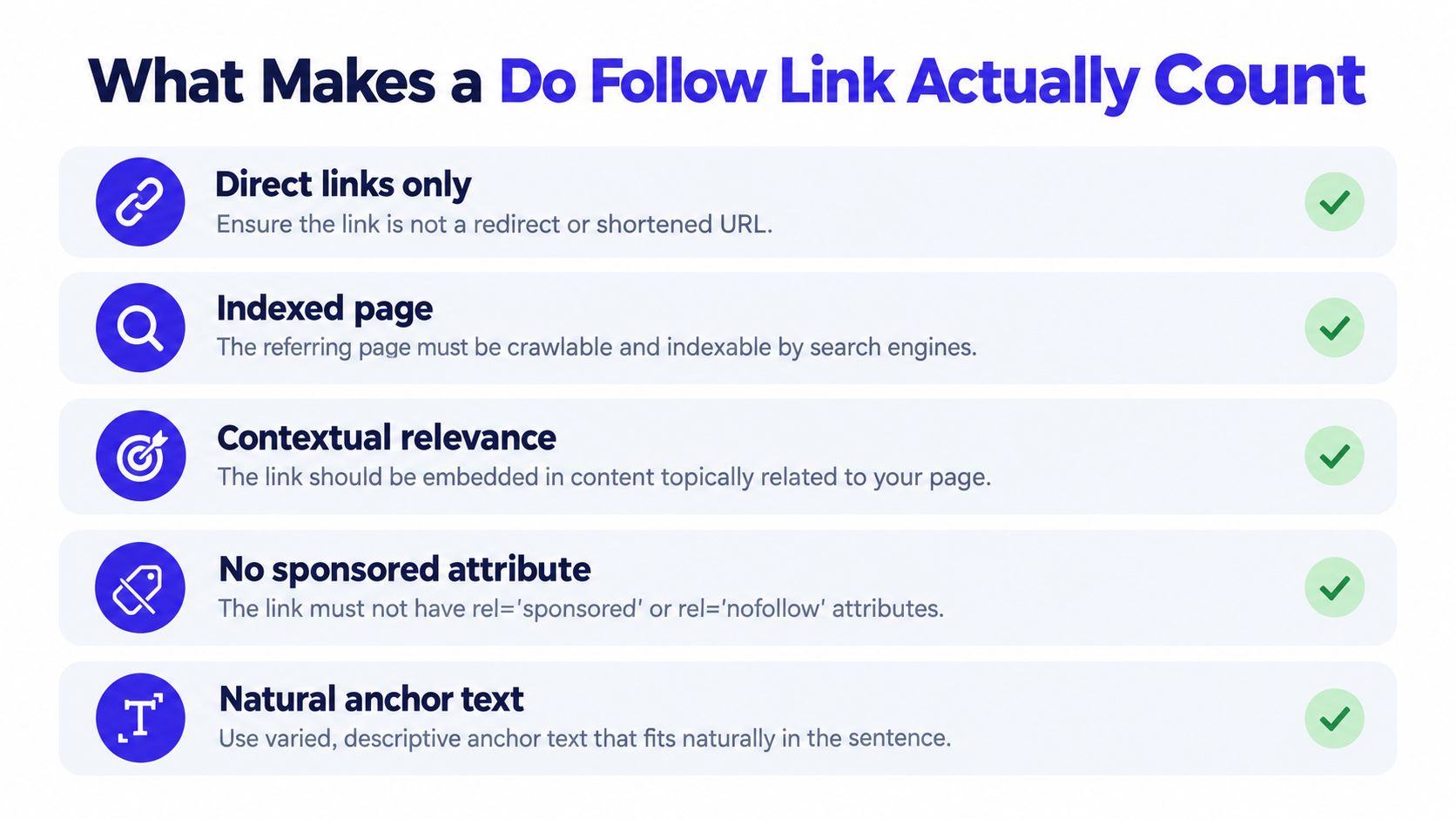
A do-follow link only matters in practice if search engines can reach, crawl, and process the page carrying it. One recent guide makes this point clearly: dofollow status alone is not sufficient. The link should point directly to the destination domain, and the page holding it needs to be indexed for the link to matter in practice (guide on direct links and indexation).
The three checks that matter most
When founders ask whether a backlink “counts,” these are the first things to verify.
Direct destination
If the link runs through a redirect, tracking hop, or blocked intermediate page, the signal can get murkier. A direct link to your actual domain is cleaner.
Indexed referring page
If the page linking to you isn't indexed, the link may exist for humans but do little for search visibility. A hidden page on a barely crawlable site won't help much, even if the code says the link is do-follow.
Stable placement
Permanence matters more than people think. If links disappear often, the effort doesn't compound. That's one reason founders should care about where a link lives and whether the page is likely to remain part of a site's long-term structure.
A practical checklist for early-stage sites
Before you celebrate a new backlink, ask:
- Can search engines access the linking page?
- Does the page appear indexed?
- Does the link go straight to my domain?
- Is the page relevant to my product or topic?
- Is this likely to remain live over time?
Those checks sound basic, but they filter out a lot of low-value links.
Why permanence matters more for small sites
When you have only a few backlinks, each one carries more weight in your overall profile. If one disappears, you feel it more sharply than a large brand would.
That's why founders should prefer links from pages that are part of a site's core structure, such as category pages, product listings, resource pages, or editorial content that doesn't get deleted after a short promotion cycle.
The best early backlink is not just follow. It's follow, direct, indexed, relevant, and likely to stay.
That combination is what turns a technical detail into an asset.
Examples and How to Check Your Do Follow Backlinks
Theory makes more sense once you look at real examples.
A founder usually gets early do-follow backlinks from a few common places: a startup directory listing, a partner's tools page, a blog post that mentions the product, or a curated alternatives page.
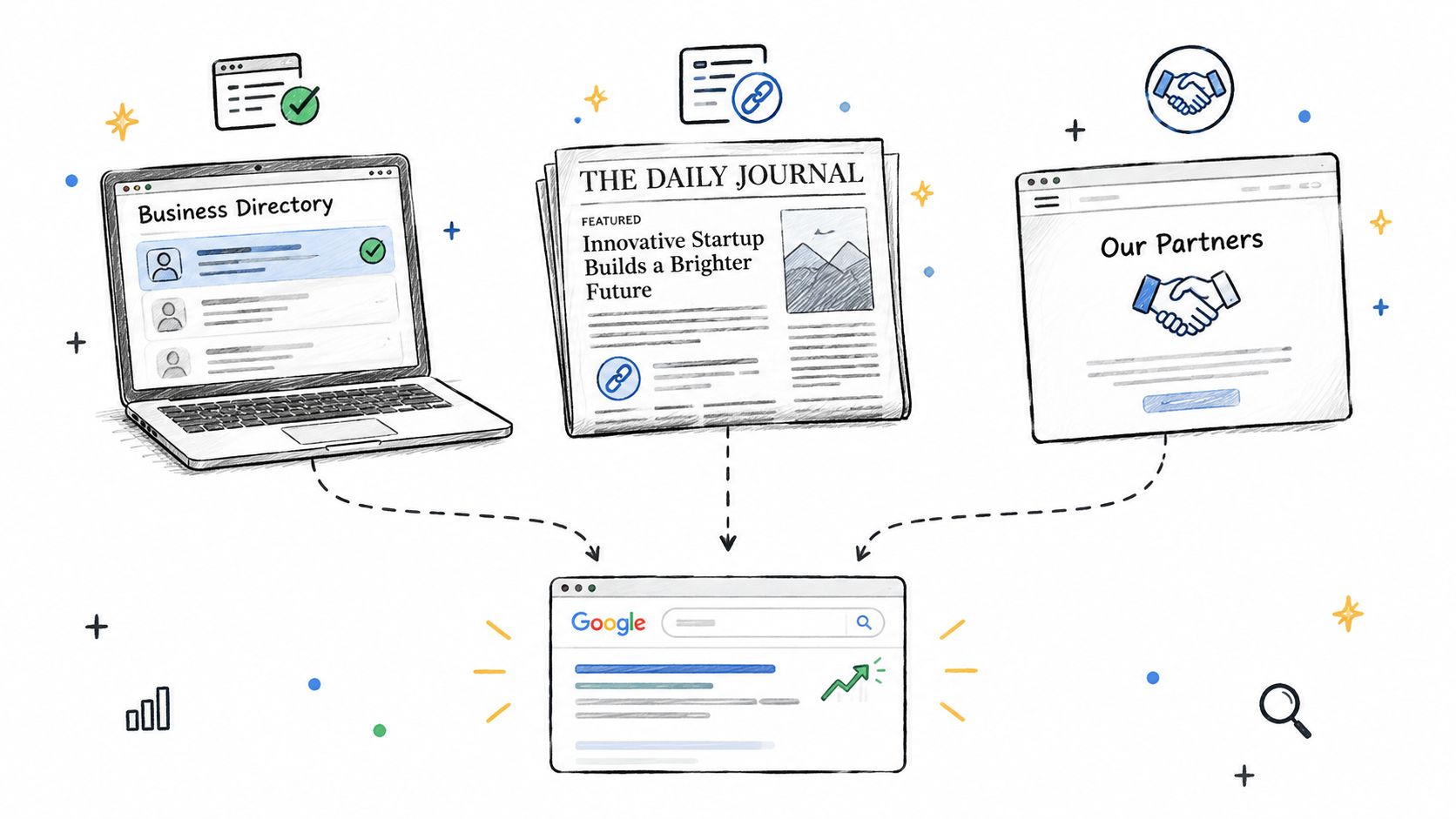
Three common examples
Editorial mention in a blog post
Example HTML:
<a href="https://yourtool.com">Your Tool</a>
This is the classic do-follow format. No qualifiers. Just a normal reference inside content.
Product directory listing
A listing page might link to your homepage or product page using your brand name. This can be useful when the page is indexed, topically relevant, and part of a site's permanent structure. If you're comparing launch and listing options, the verified project Backlinker Ai gives one example of how backlink-focused distribution gets presented in startup ecosystems.
Partner or integration page
A partner says your app works with their software and links directly to your integration page. This is often strong because the relevance is obvious.
How to check a backlink manually
You don't need expensive software for your first audit.
- Open the page with the link.
- Right-click the link and inspect it in your browser.
- Look for a
relattribute. - If there's no
nofollow,sponsored, orugc, it's likely a standard do-follow link. - Click through and confirm it goes directly to your domain.
That gets you most of the way there.
How to check whether the page is worth anything
After the HTML check, verify the page itself.
- Search visibility check: Search for the page title or exact URL in Google and see whether it appears.
- Context check: Read the surrounding section. Is the link placed naturally?
- Placement check: Is the page part of a real site structure, or is it buried somewhere users won't reach?
If you want help choosing lightweight software for backlink research and monitoring, this roundup of backlink building tools is a good next step.
A short walkthrough can make the manual process easier:
What to track after you get the link
Don't just record “got backlink.” Track whether it does anything.
- Referral visits: Did people click?
- Indexation movement: Did the linked page start appearing in search more reliably?
- Page relevance: Did the backlink point to your homepage, or to a page that matches user intent better?
For most founders, this lightweight habit is enough. Check the code. Check the page. Check whether the link sends either crawlers or people to a page you care about.
Smart Ways to Earn Quality Do Follow Backlinks
The best way to earn do-follow backlinks is to stop thinking about backlinks as collectibles. Think about them as durable references on pages that make sense for your product.
That framing helps you avoid the common trap of chasing volume from low-trust sites. For a new product, a small set of relevant, stable links usually beats a pile of junk.
Where founders should focus first
A practical order of operations looks like this:
- Start with listings that stay live: Product directories, launch platforms, and niche catalogs can create durable references if they use direct, permanent links.
- Build pages worth citing: Integration pages, comparison pages, templates, and original resources give other sites a reason to link.
- Ask for the obvious links: Partners, communities, podcasts, and newsletters that already mention you are often easier wins than cold outreach.
One option in this category is IndieTool's guide on backlinks for a new website, especially if you're thinking about early-stage indexation and where first links usually come from.
What a good opportunity looks like
A strong do-follow opportunity usually has several traits at once:
- Relevant topic: The page is close to your niche.
- Editorial placement: The link exists because your product fits, not because a script sprayed it everywhere.
- Direct linking: No messy redirect path.
- Likely permanence: The page is part of a site's ongoing structure.
For founders evaluating listing platforms, directories, or launch sites, one practical option is IndieTool, which offers permanent direct do-follow product links and broad distribution across index, category, and alternatives pages. That kind of setup is useful when you care about both durable placement and multiple crawl entry points, not just getting your URL posted once.
What to avoid
Some shortcuts create more noise than value.
- Bulk link blasts: They increase count without improving trust.
- Irrelevant placements: A random backlink on an unrelated site rarely helps much.
- Disposable pages: If the page is likely to vanish, the link won't compound.
Earn links where a human editor or site owner would still want the page published six months from now.
That's the standard worth using. If a link passes that test, it's usually the kind of backlink a new site can build on.
If you're launching something new and want a practical way to add durable search visibility, IndieTool helps founders publish products on a directory and distribution platform built for early discovery. You get direct permanent do-follow links, broad listing exposure, and lightweight analytics so you can see whether those placements are sending attention back to your site.