Indietool
Submit Your Software: 7 Directories to Launch in 2026

You finished the build late last week. You wrote a quick paragraph about it, grabbed the first screenshot you could find, submitted to one platform, and waited. Weeks later, you've heard nothing, you don't know if the page was reviewed, and you have no referral data to check. The product works. The submission didn't.
That stall usually isn't bad luck. It's a missing product record, weak visuals, unclear categories, and no plan for what happens after a listing goes live. Reviewers and visitors can't evaluate what they can't understand in a minute or two.
Scale makes that problem worse. In Apple's 2024 App Store report, Apple said it reviewed nearly 6.9 million app submissions in 2023 and helped more than 192,000 developers publish their first app. You aren't competing for an empty shelf. You're competing for attention in a crowded, rule-based system.
The Workflow This List Follows
Don't submit your software everywhere at once. First, prepare one complete product record with pricing, limits, categories, competitors, and proof. Second, build launch assets you can reuse. Third, choose directories by launch stage and link type. Fourth, track crawling, clicks, and signups instead of guessing.
The seven platforms below aren't ranked in isolation. Each one is judged on the step where it fits best, what it costs, how fast it moves, and what it doesn't guarantee. No directory on this list can promise you rankings, traffic, or acceptance.
Table of Contents
- The Workflow This List Follows
- 1. Awesome Tools
- 2. IndieTool
- 3. Product Hunt
- 4. SaaSHub
- 5. BetaList
- 6. Uneed
- 7. AlternativeTo
- 8. Alternative.me
- How the seven submission platforms compare on pricing, free options, and best use
- Turn Your Submission Into a Tracked Launch Plan
1. Awesome Tools
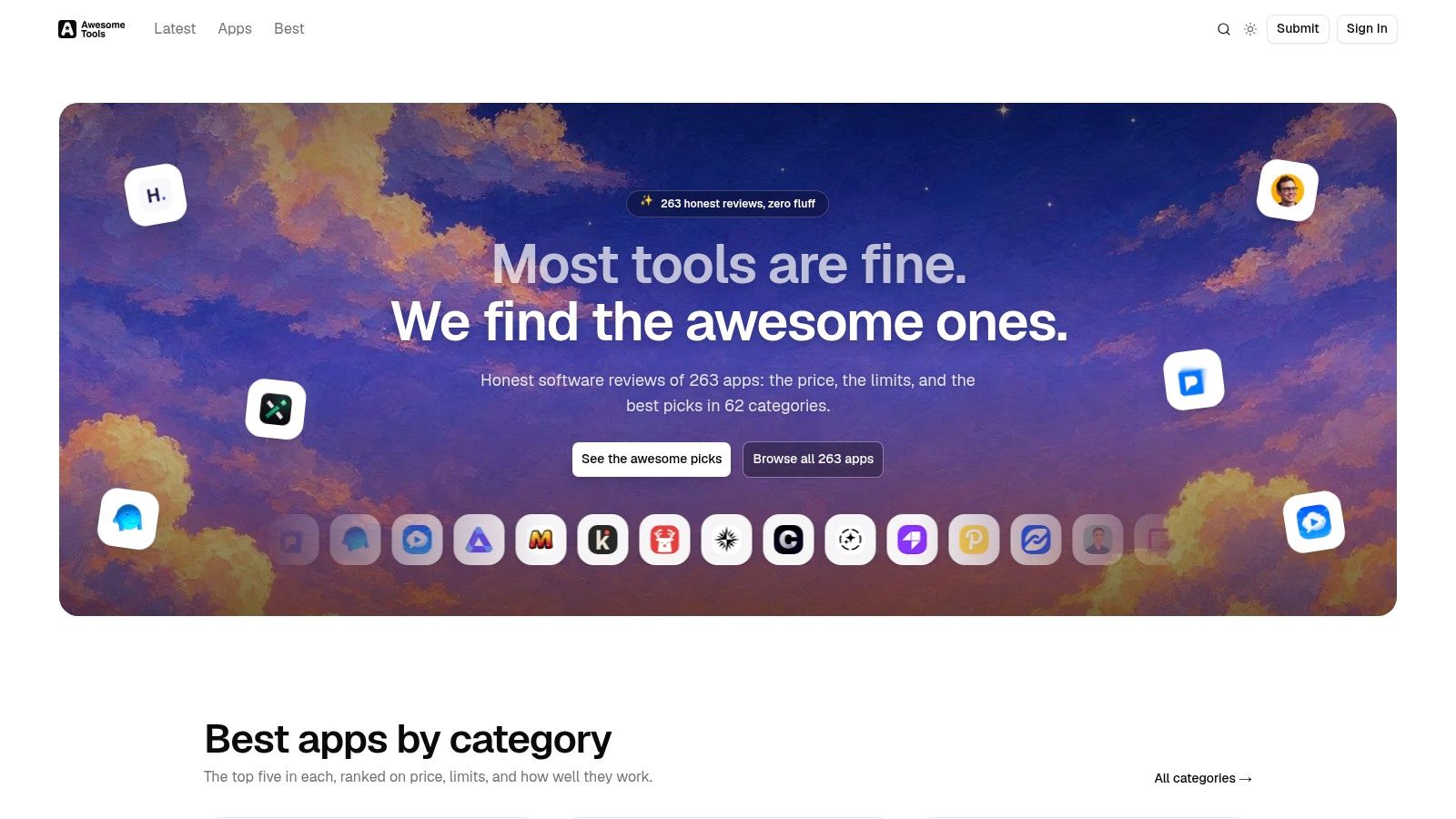
Awesome Tools fits step one and step three together. It's a curated software, AI, and developer tools directory built around hands-on reviews rather than thin listings, and it'll force you to get your product record right before you chase more placements. If your current pitch is a tagline and a homepage link, that weakness shows up first.
What Makes the Listing Different
Each approved tool gets an editorial review covering real pricing tiers, hidden usage limits, pros, cons, and direct alternatives. That's more useful to a buyer than your own feature list, because it answers the questions you'd rather skip. Tools also appear in ranked Best Of category guides across areas like AI tools, developer tools, SEO, productivity, CRM, and design, ranked by price-to-value, real limits, and workflow fit.
Approved tools can also embed a dynamic badge showing a verified Ahrefs Domain Rating or monthly organic traffic figure. When used appropriately, that badge provides visitors with a quick credibility signal. Used as your only proof, it won't save a vague product page.
Submission Routes and Timing
You have three practical choices when you submit your software to Awesome Tools:
- Free permanent dofollow listing: Available to qualifying launched products that meet its authority thresholds and place a reciprocal link or badge back to Awesome Tools.
- $49 Featured Launch: Waives the authority threshold and backlink requirement, publishes the review and permanent dofollow backlink within 24 hours, and adds Featured placement on the homepage and category pages.
- $149 Featured and Newsletter bundle: Adds a Sponsored Pick in its newsletter for founders, indie hackers, and developers, plus 30 days pinned in category top picks.
Founders who build with AI coding agents can also submit programmatically through its public JSON Agent Submission API, which suits teams shipping multiple tools. Agencies running done-for-you submissions get higher API limits through its partner program, and creators can earn commission on paid launches they refer.
Practical rule: Pay for speed only when your landing page, pricing, and onboarding are already ready to convert the attention you're buying.
I recommend Awesome Tools when you want one detailed, permanent review page early in your sequence, especially for AI or developer tools where limits and alternatives matter. Google's own JavaScript SEO basics guidance describes crawling, rendering, and indexing as three sequential stages, so your name, description, category, and outbound links need to sit in crawlable HTML rather than hide behind client-side scripts. A structured review page supports that. It still doesn't guarantee indexing or ranking, and you should verify your listing URL in Search Console yourself.
2. IndieTool
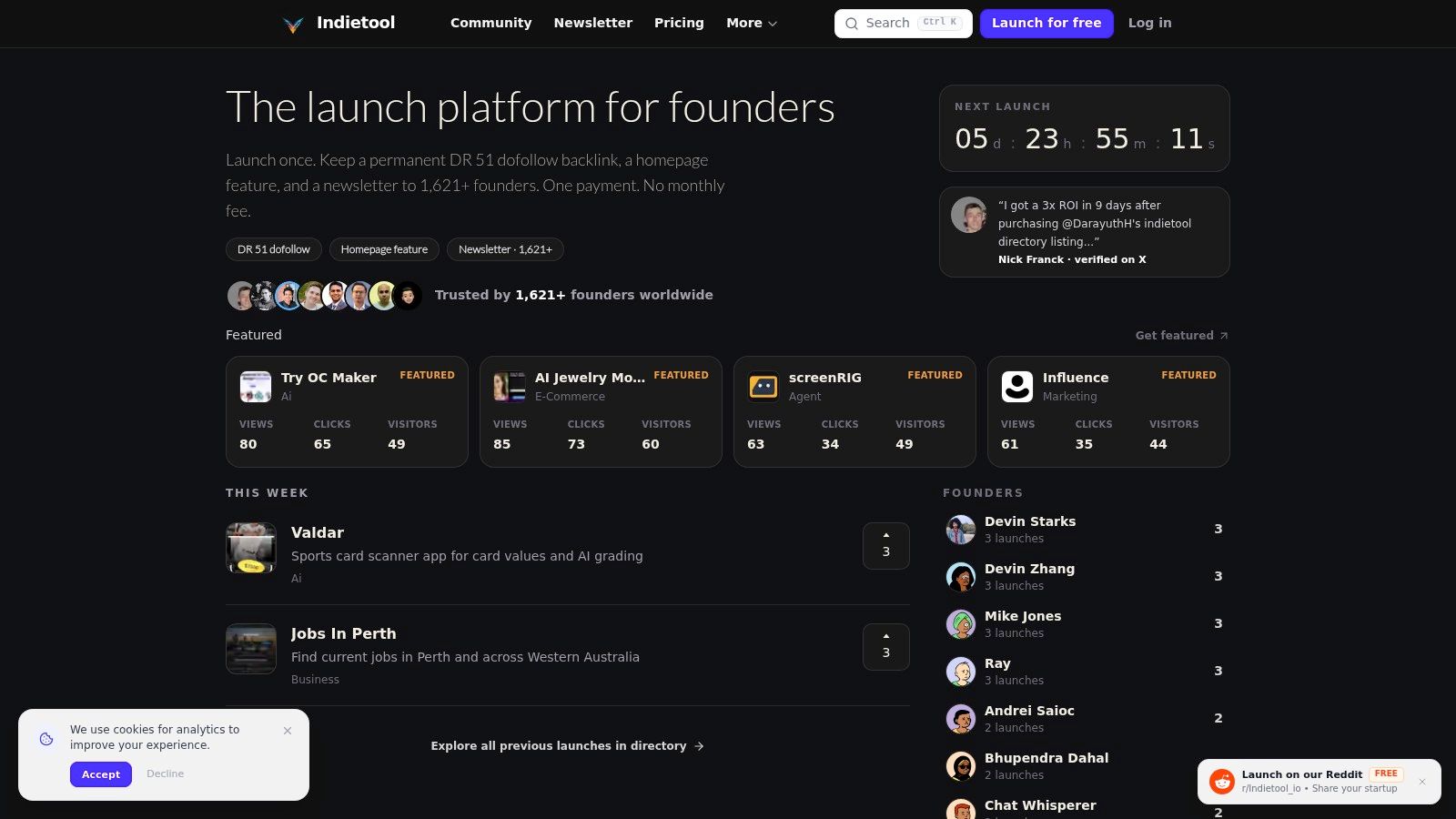
We built IndieTool for the moment right after your product record is ready and you want a live listing without waiting in a review queue. We accept MVP, beta, and live apps, so you don't need to delay distribution until every feature is finished. That makes it a step three platform with step four measurement built in.
What You Get When You Submit
A paid listing creates a permanent do-follow backlink and distribution across category, index, and alternatives pages. Our Standard listing includes 1 lifetime app submission as a permanent listing with no badge or reciprocal link required. Each credit equals one permanent startup submission, and credits don't expire, so a studio can buy once and launch products as they're ready.
Paid submissions go live in under 60 seconds with instant automated indexing. A submitted startup is also included in our weekly email newsletter sent to 1,000+ active builders. Your dashboard then shows views, visitors, and outbound clicks, which gives you something concrete to review instead of refreshing a pending status page.
Free, Paid, and API Options
- Free route: Use the Submit Free App button, add our reciprocal badge, and your listing is activated after the badge is validated.
- Paid route: Skip the badge requirement and go live immediately after submission is completed.
- API route: Our REST API lets developers and automation pipelines submit applications as JSON with a remote image URL or as a file upload, using one credit per submission.
Don't confuse a live listing with a guaranteed search result. Google's Search Console Page indexing report documentation distinguishes pages Google has found from pages it has included in search results, so discovery and indexing are separate outcomes. A crawlable listing improves your chances. It isn't a ranking promise.
Submitting faster only helps if you watch what happens next. Check referral clicks weekly, not hourly.
Choose IndieTool when speed, a permanent link, and measurable referral data matter more than a launch-day event. Skip the paid route if your landing page can't yet explain who the product is for. No backlink fixes unclear positioning, and we won't pretend otherwise.
3. Product Hunt
Say your product record and assets are done, and you want one concentrated day of feedback from tech-minded early adopters. That's Product Hunt. It's a community launch platform, not a permanent software directory, and you should treat it as an event you staff all day.
Launching is free with a personal account, and company accounts can't post products. You can submit your own product without hiring a third-party hunter, add media and details, link to your site, and schedule a launch up to a month ahead. That scheduling window is your preparation window. Use it.
Where Launches Go Wrong
Founders prepare a gallery and then go silent. On Product Hunt, unanswered questions are your listing. Visitors read comments to judge whether you're responsive, whether limits are clear, and whether the product is real. Plan who replies, what demo links you'll share, and which criticisms you'll answer with a fix instead of a defense.
Rules also prohibit paying someone to hunt your product or send traffic to it. Don't build your plan around bought votes or coordinated manipulation. You'll risk the launch and learn nothing useful about demand.
When It Fits Your Sequence
- Use it for: A public milestone, a major release, or a first launch with an audience you can notify.
- Don't use it for: A quiet SEO placement or a guaranteed backlink strategy.
- Prepare first: Tagline, gallery, first comment, pricing answers, and a working demo path.
If you're weighing timing against other launch sites, compare the mechanics in this Product Hunt, BetaList, and IndieTool comparison before you lock a date. I recommend Product Hunt once, at a moment that matters, with your full day cleared. Visibility and ranking on the day aren't guaranteed, and a weak product page will waste the one launch window you get.
4. SaaSHub
SaaSHub serves a different step. It's where buyers compare released software against alternatives, so your listing has to survive side-by-side scrutiny. If you can't name your competitors, you aren't ready for it.
The submission form asks you to select categories and name competitors. It accepts SaaS, infrastructure and platform products, most other software, and mobile apps with a suitable website. Verifying your product with an email address on its own domain can give your submission higher priority, which is a small step worth doing before you submit anywhere else too.
Write for Skeptical Buyers
Generic AI claims perform badly in comparison contexts. The 2025 Stack Overflow Developer Survey reports that 84% of developers use or plan to use AI tools, while 46% actively distrust their accuracy. Your listing should therefore state supported integrations, deployment options, pricing boundaries, data retention, and where a human stays in control. Concrete limits build more trust than another "AI-powered" headline.
That advice applies beyond AI products. Buyers on comparison pages scan for platform support, pricing model, and the one workflow you do better than the incumbent. Give them that in plain language.
The Constraints
Products must be released. Waitlist-only pages aren't accepted, and neither are free-hosting subdomains or products not in English under its guidelines. The standard submission workflow is presented as free, but every submission needs approval and publication isn't immediate.
Submit your software to SaaSHub after launch, once your pricing and competitor story are stable. It's a discovery and comparison placement, not a launch-day spike. Expect a review process, and don't budget traffic from it until the listing is approved and you can see referral data in your own analytics.
5. BetaList
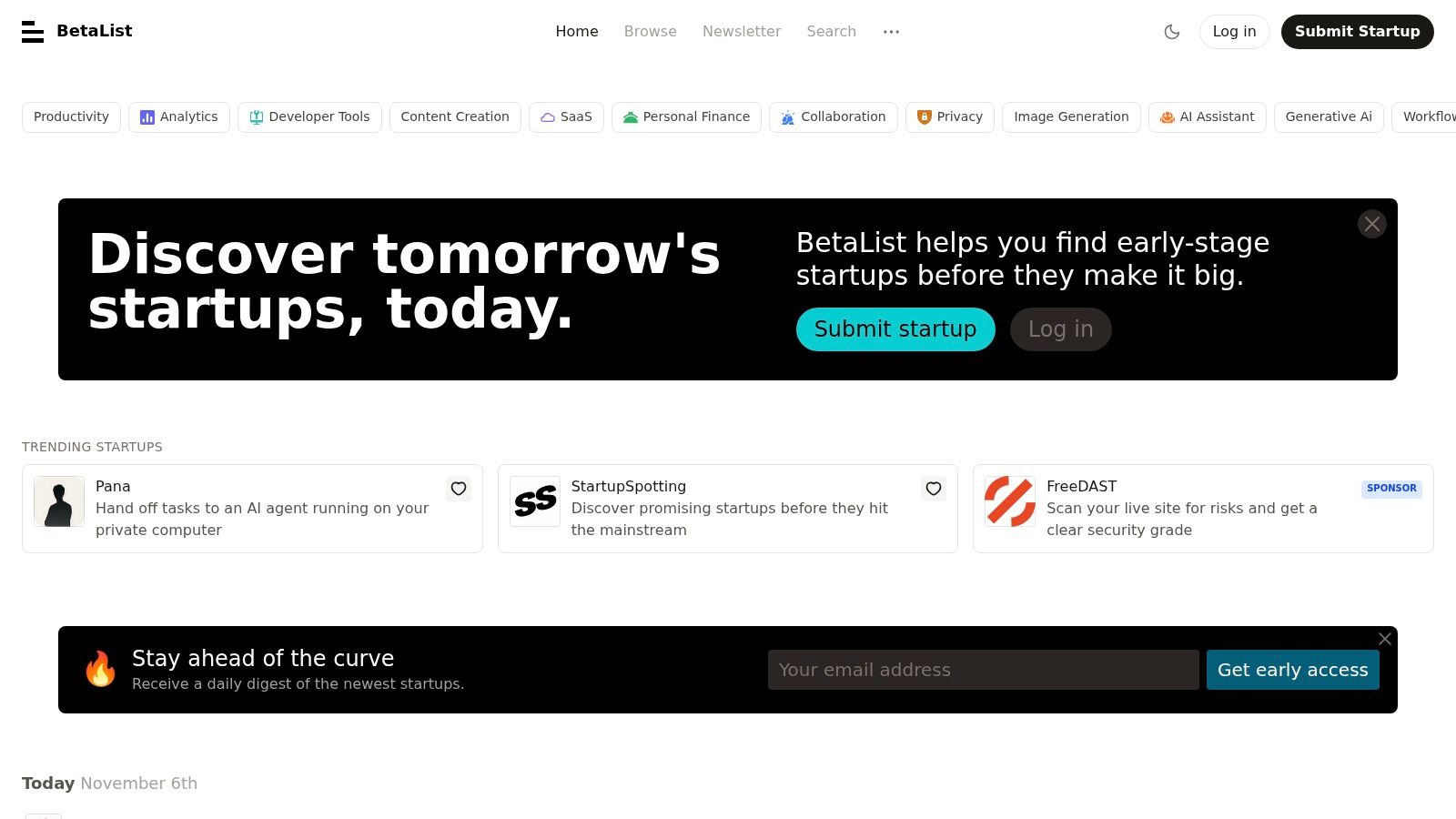
BetaList is the editorial option on this list. It features new technology startups for readers who like discovering products early, and its listings are hand-edited. You're paying for curation and an audience that expects early-stage products, not for instant publication.
It accepts products that are pre-launch, in beta, or live, provided they're new to its audience and run on their own domain with a working website. That makes it one of the few places where a genuine beta belongs. A thin concept page still won't pass, because editors need something real to describe.
What the Money Buys
All submissions are paid, and plans differ by how quickly you're featured and whether newsletter placement is included. If your startup isn't selected, you receive a full refund, which lowers the risk of trying. Newsletter inclusion depends on your plan or on product performance, so read the current plan details instead of assuming every featured startup gets the same reach.
You can use tagged links to track referred visits. Do that. Editorial exposure feels good, but tagged referral data tells you whether BetaList readers match your audience.
Trade-Offs to Accept
- Editorial polish: A reviewed, edited listing often reads better than your raw submission.
- No free route: Every submission costs money before you know the outcome.
- Redirect link: The "Visit Site" link uses a redirect, so judge it on users and feedback, not link equity.
I recommend BetaList when you need early users and qualitative feedback and can wait for an editorial decision. Don't choose it when a permanent dofollow backlink is your main goal. Paying speeds up consideration. It doesn't buy acceptance.
6. Uneed
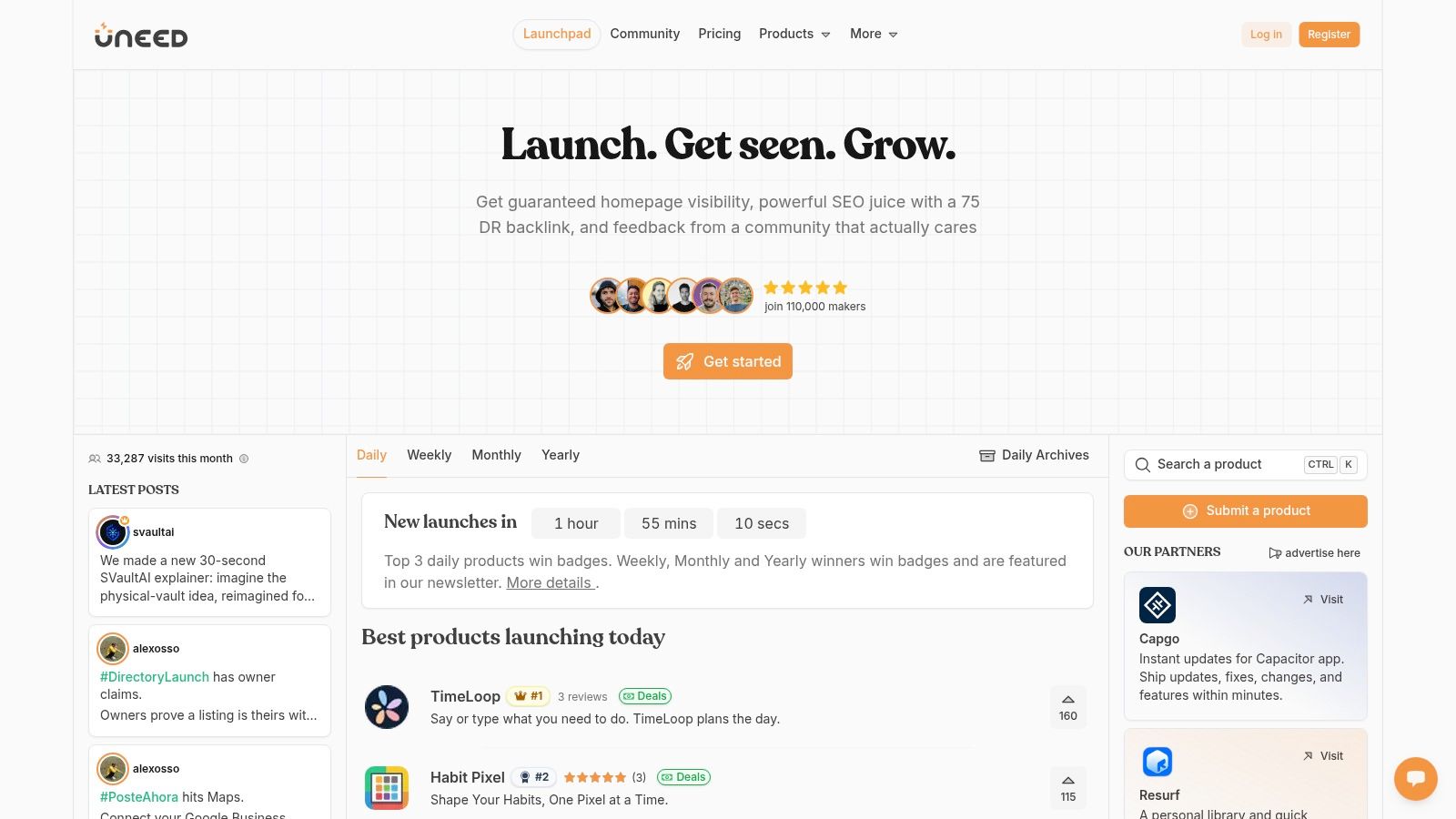
Uneed is a launch and discovery platform built for makers, and its core decision is simple. You can wait in a free queue, or you can pay to control timing. Neither answer is automatically right. It depends on whether your launch date is tied to anything else.
Paid options split into a fast-track route, where Uneed assigns a launch date, and a Skip-the-Line route, where you choose an available date. If you're coordinating a newsletter, a social announcement, and a directory sequence, a chosen date has real value. If you're testing, it doesn't.
Read the Free Conditions Carefully
Free launches have score thresholds for remaining published and keeping a do-follow backlink. That's the detail founders miss when they describe Uneed as a free backlink. A free launch that doesn't perform may not leave you the lasting listing you planned around, so check current conditions before you count on it.
Free-launch availability and rules can also change. Don't build a launch calendar on terms you read months ago. Confirm them in the week you submit.
Where Uneed Fits
Use Uneed as a community feedback window during your launch week. It provides launch materials for social posting, which helps if your asset kit is thin, though your own screenshots and demo will always carry more weight. If you're mapping several platforms into one week, this overview of startup listing sites for launch planning helps you sequence the free queue against paid dates.
Scheduling rule: Pay for a launch date only when other channels are committed to that same date.
I recommend Uneed for makers who'll actively promote and respond on launch day. If timing and a lasting listing matter most, budget for a paid option instead of hoping a free launch clears every threshold.
7. AlternativeTo
AlternativeTo reaches people at the exact moment they're replacing a tool they already know. That intent is valuable. A visitor searching for alternatives to an established product doesn't need to be convinced the category exists, only that your option fits their platform and budget.
You can suggest a new application for free, or pay a one-time $5 priority review that's usually handled within one to two business days. Priority review speeds up the look. It doesn't guarantee approval, and you should read that sentence twice before paying.
What a Strong Entry Needs
Entries cover platforms, license, description, and tags, and products can be suggested as alternatives to existing software. Accuracy matters more than flair here. List every platform you support, state your license and pricing model plainly, and only claim alternative status against tools you compete with. Inflated comparisons get your submission declined and annoy the users you'd want.
Developers of approved listings can request access to update product details, and many edits can then be made without waiting for review. Claim that access promptly. Pricing and platform support drift, and a stale comparison page sends you the wrong visitors.
The Honest Limits
- Slow free queue: The ordinary review backlog can last months.
- Nofollow links: Website links are usually nofollow, and you can't pay to change that.
- Fit-based acceptance: Submissions that don't meet its criteria are declined.
Submit your software here early, precisely because the free queue is slow, and treat any approval as long-term comparison traffic rather than launch fuel. If your product is an AI tool, see how category placement works in this AI tools directory guide before you pick tags. Judge AlternativeTo on qualified evaluation visits, never on link value.
8. Alternative.me
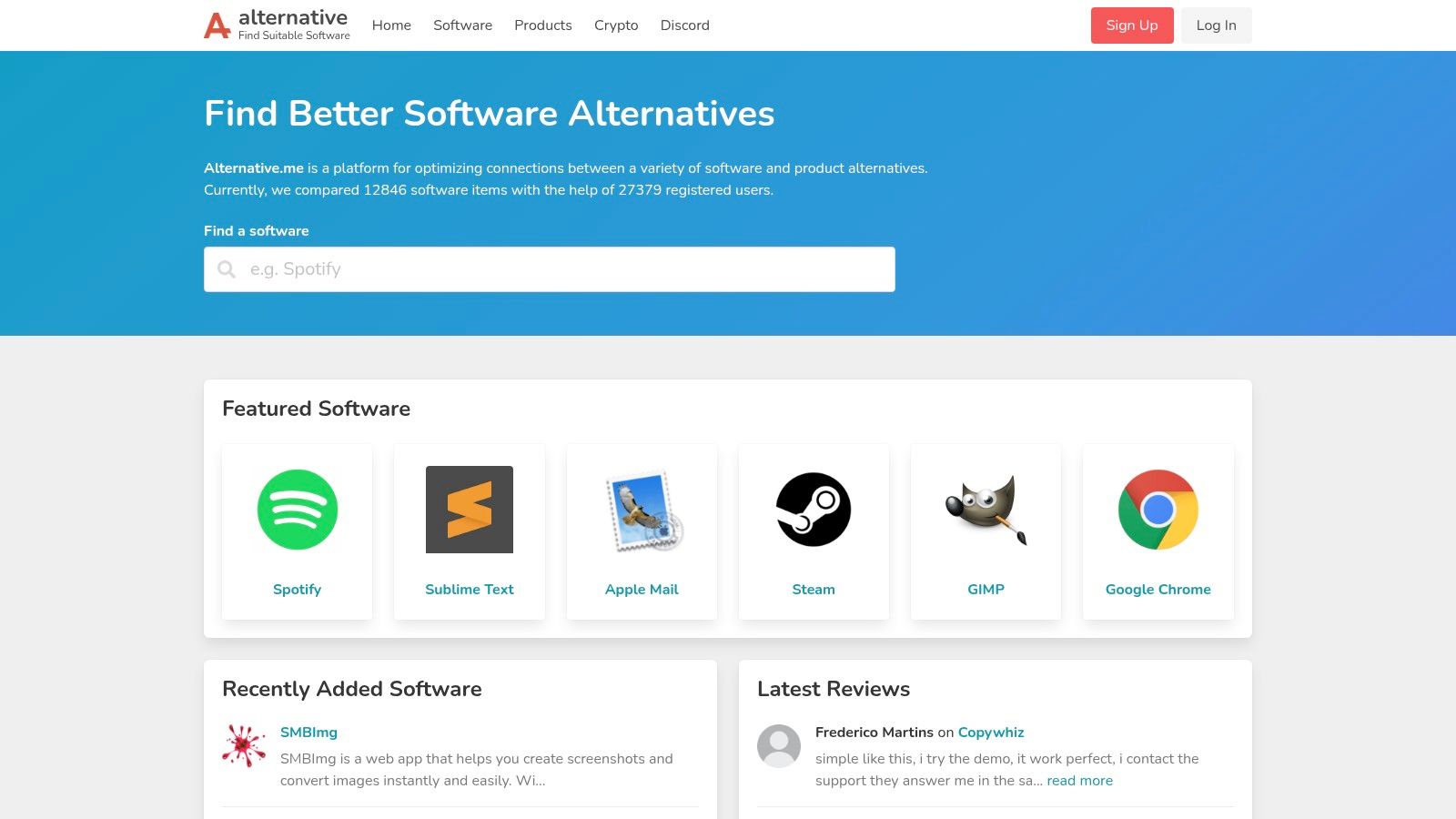
Alternative.me is the quietest option on this list, and that's its role. It's a software discovery and alternatives platform with a direct submission route, not a launch-day stage. Add it near the end of your sequence, when your core listings are live and you're filling in durable discovery coverage.
You need a user account to submit new software. From the account dashboard, you can submit entries and manage previous ones, which makes maintenance easier than platforms where every correction means a new support request. Its published instructions don't state a fee, so you aren't required to buy a launch package to get started.
What You Won't Know Up Front
The submission guidance doesn't specify a review timeline or guarantee acceptance. Available information is also limited on listing customization and promotional reach. That uncertainty is manageable if you treat the listing as a low-cost addition. It's a problem only if you schedule your launch around it.
Before you invest time, browse the platform for your category. Check whether comparable tools are present, whether listings carry the detail your buyers need, and whether entries look current. Ten minutes of that checking tells you more than any directory roundup, including this one.
How to Submit Well
- Reuse your master product record: Keep name, description, and categories consistent with your other listings.
- Record the submission date: Note it in your tracking sheet so you can follow up on status.
- Return and update: Use the dashboard when pricing or positioning changes.
I recommend Alternative.me as a supporting alternatives presence for founders with an hour to spare after higher-priority submissions. Don't expect a launch spike, a stated review window, or promotional reach that isn't described. Modest expectations make it a reasonable final step, not a disappointing first one.
How the seven submission platforms compare on pricing, free options, and best use
Match each platform to the workflow step it serves. Free routes suit a zero-budget first pass; paid options buy faster scheduling, editorial placement, or wider distribution. No platform here guarantees traffic, ranking, or approval beyond what it states.
| Item | Pricing model | Free option | Best for |
|---|---|---|---|
| Awesome Tools | Free qualifying listing; $49 Featured Launch; $149 Featured + newsletter bundle | Yes, for qualifying products with a reciprocal link | Editorial reviews, software discovery, and founders seeking a permanent listing |
| IndieTool | One-time credit packages; the Standard listing needs no badge | Yes, with a reciprocal badge; activated after the badge is validated | Indie founders seeking quick listing and promotional distribution |
| Product Hunt | Free to launch | Yes | Coordinated launches seeking early-adopter feedback |
| SaaSHub | Standard submission is free | Yes, subject to approval | Released software seeking discovery alongside alternatives |
| BetaList | Paid submission plans; prices vary | No | Early-stage startups seeking curated exposure |
| Uneed | Free queue or paid faster-scheduling options | Yes, subject to current conditions | Makers choosing between a free launch queue and faster scheduling |
| AlternativeTo | Free submission; optional $5 priority review | Yes | Software seeking visibility in alternative and comparison searches |
| Alternative.me | No fee stated; submission details are limited | No fee is stated | Adding a product to another software-discovery platform |
Turn Your Submission Into a Tracked Launch Plan
A listing isn't a launch. The workflow that works is boring and repeatable. You finish the product record, prepare assets once, submit in a sequence matched to your stage and budget, then review what happened for two to four weeks before you spend more money.
Start with your master record. Write a one-sentence description that names your user and outcome, then add pricing, limits, platforms, categories, two real competitors, and one piece of proof such as a demo, a user count you can defend, or a documented result. Every platform above asks for some version of this. Writing it once stops the inconsistent, half-finished submissions that stall in review queues.
Next, build your asset kit. You need a clear logo, three honest screenshots showing real workflows, a short demo or walkthrough, and answers to the five hardest questions about price and limitations. Reuse that kit everywhere, and adjust only what each platform's format demands.
Measure Four Outcomes, Not One
Founders usually ask whether a listing "worked" only when rankings don't move. That's the wrong test. This breakdown of privacy-focused analytics tools and aggregate measurement supports a more useful split between pageviews, referrals, and deeper attribution, so judge each submission on crawl and indexation, branded discovery, referral engagement, and product activation.
Record every listing URL and submission date in one sheet. Add campaign parameters where a platform allows outbound links you control, compare branded search impressions before and after, and track outbound clicks through to signups. A permanent link with no qualified clicks is a vanity metric. A nofollow comparison page sending buyers who activate is a working channel.
Privacy deserves the same precision. Removing cookies doesn't automatically remove GDPR obligations, and this guide to tracking website visitors without storing personal data makes the point that implementation, identifiers, retention, and disclosure determine your legal position. Check whether IP addresses or campaign parameters can identify individuals, how long events are kept, and what your privacy policy says. Treat "GDPR-compliant" as a configuration claim you verify, not a label you copy.
Your Checklist for This Week
- Day one: Draft your one-sentence description, pricing, limits, and competitor list.
- Day two: Produce screenshots and one demo you can reuse on every platform.
- Day three: Choose two or three platforms that match your stage, one for speed, one for comparison traffic, one for launch feedback.
- Day four: Submit your software with tagged links where allowed, and log every URL and date.
- Two weeks later: Review dashboard views, referral clicks, indexing status, and signups before buying anything else.
No directory guarantees rankings, traffic, or acceptance, however it describes its links or its reach. Treat each submission as one distribution channel among several, keep your own measurement, and let referral quality decide where your next launch budget goes. That's how a folder of listings becomes a launch system you can repeat for every product you ship.
Ready to start with the fastest step in the sequence? Submit your product to IndieTool today, get your permanent listing live in under a minute, and use your dashboard views, visitors, and outbound clicks over the next two weeks to decide which directory earns your next launch dollar.